

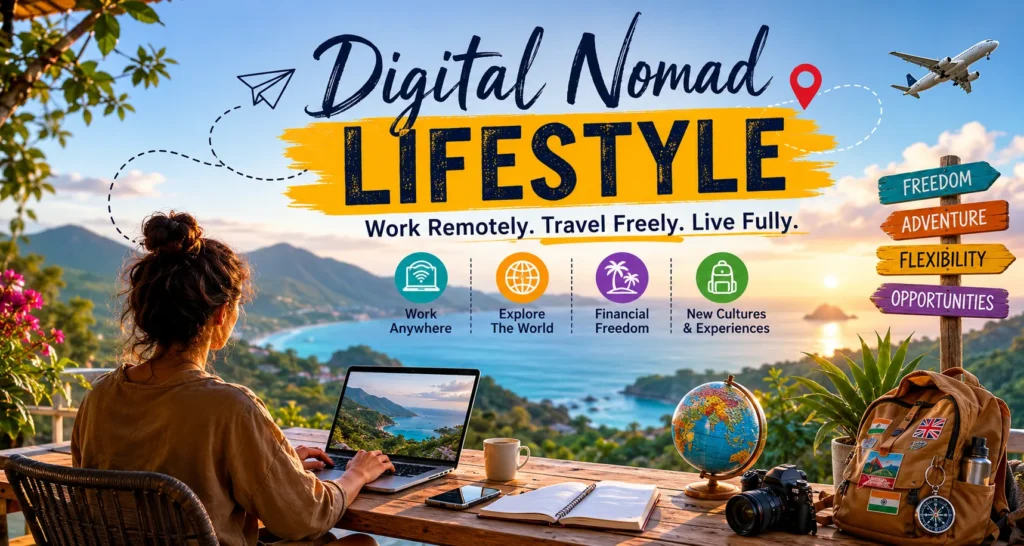
The digital nomad lifestyle has become one of the most popular ways to combine work, freedom, and travel. Instead of being tied to a traditional office, digital nomads earn money online while living in different cities and countries around the world. Whether working from a beachside café in Thailand, a mountain town in Himachal Pradesh, or a coworking space in Portugal, digital nomads enjoy the flexibility to choose where and how they live.
As remote work continues to grow, more professionals are exploring this lifestyle to gain location independence and experience new cultures. However, becoming a successful digital nomad requires careful planning, financial management, and an understanding of visas, destinations, and remote work opportunities.
This guide covers everything you need to know about the digital nomad lifestyle, from getting started and managing finances to choosing the right destinations and overcoming common challenges.
What Is the Digital Nomad Lifestyle?
A digital nomad is someone who earns income online while traveling or living in different locations. Unlike traditional employees who work from a fixed office, digital nomads can work from anywhere with a laptop and a stable internet connection.
The core idea behind the digital nomad lifestyle is location independence. Your income is not connected to a physical workplace, allowing you to move freely between cities and countries while continuing your professional career.
Most digital nomads rely on online work such as freelancing, remote employment, content creation, consulting, digital marketing, software development, design, or online businesses. With the right tools and internet access, work can be completed from virtually any location.
The lifestyle also provides a sense of constant mobility. Instead of spending years in one place, digital nomads have the opportunity to explore different cultures, climates, and communities while maintaining a steady income.
How to Start Your Digital Nomad Journey
Starting a digital nomad lifestyle begins with securing a reliable source of remote income. While some people quit their jobs and immediately begin traveling, a gradual transition is usually the safest and most sustainable approach.
Many aspiring digital nomads first search for fully remote jobs through professional platforms such as LinkedIn and remote job boards. Remote positions are now available in industries ranging from marketing and customer support to software development and project management.
Freelancing is another common pathway. Skills such as graphic design, video editing, content writing, web development, and social media management can be offered to clients around the world.
Content creation and digital products have also become popular income sources. Bloggers, YouTubers, online educators, and creators often build businesses that allow them to work from any location.
Before beginning international travel, it is often beneficial to work remotely from your current city for several months. This helps establish routines, build financial stability, and confirm that remote work is sustainable before committing to a nomadic lifestyle.
Managing Finances as a Digital Nomad
Financial planning is one of the most important aspects of long-term nomadic success. Contrary to popular belief, becoming a digital nomad does not require extreme wealth. In many cases, digital nomads spend less money than they would in expensive urban centers.
Strategic budgeting helps travelers maintain financial stability while enjoying location independence. Tracking expenses, maintaining emergency savings, and understanding local living costs are all essential habits.
One of the biggest advantages of the digital nomad lifestyle is the ability to choose destinations based on affordability. Domestic locations such as Goa, Leh, Coorg, and other emerging remote-work destinations often offer lower living costs compared to major metropolitan cities.
Internationally, countries such as Sri Lanka, Thailand, and Vietnam provide affordable accommodation, food, transportation, and coworking facilities. Many digital nomads discover that they can significantly reduce expenses while improving their quality of life.
Co-living and coworking spaces are also popular options. These spaces combine accommodation, work environments, and networking opportunities, making them ideal for travelers seeking both productivity and community.
Understanding Visas and Travel Logistics
Visas are one of the most important considerations for digital nomads. Every country has its own immigration rules, visa durations, and extension options.
Many countries allow visitors to stay for a limited period and then apply for visa extensions. Indonesia, for example, has long been a favorite destination for digital nomads due to its flexible stay options and thriving remote-work community.
In recent years, several countries have introduced dedicated Digital Nomad Visas. Nations such as Thailand, Spain, and Portugal now offer programs specifically designed for remote workers who earn income from foreign sources.
Tax obligations are another important consideration. Many countries apply residency rules based on the amount of time spent within their borders. A common guideline is the six-month rule, where spending more than a certain number of days in a country may create tax responsibilities.
Indian passport holders may face additional visa requirements compared to some Western travelers, making careful planning and research especially important before choosing a destination.
How to Choose the Right Country
Not every destination is suitable for remote work. Successful digital nomads evaluate locations based on several key criteria before relocating.
Visa availability is often the first factor. Many nomads prefer destinations that allow stays of at least 60 to 90 days, reducing the stress of frequent travel and visa renewals.
Reliable high-speed WiFi is essential. A beautiful location loses much of its appeal if internet connectivity makes work difficult. Consistent internet access should always be a priority when selecting accommodation and destinations.
The cost of living also plays a major role. Affordable locations allow digital nomads to save money while maintaining a comfortable lifestyle.
Supportive communities can make a significant difference as well. Locations with active digital nomad groups, coworking spaces, and networking opportunities help remote workers build friendships and professional connections.
Personal safety, freedom, healthcare access, and proximity to gyms and wellness facilities are additional factors that contribute to a positive long-term experience.
Challenges of the Digital Nomad Lifestyle
Although the digital nomad lifestyle offers incredible freedom, it is not without challenges.
Decision fatigue is a common issue. Constantly deciding where to stay, where to work, and where to travel next can become mentally exhausting over time.
Maintaining long-distance relationships can also be difficult. Family members, friends, and romantic partners often remain in one location while nomads move between destinations.
Loneliness is another challenge. Even in destinations with active digital nomad communities, travelers may occasionally experience isolation. Building friendships often requires intentional effort and social initiative.
Work-life balance can also become complicated. Without a traditional office structure, it is easy to either overwork or become distracted by travel opportunities. Successful digital nomads develop routines that allow them to enjoy new destinations while maintaining productivity.
Strong self-discipline is essential for managing deadlines, staying motivated, and achieving long-term professional goals.
Practical Tips for New Digital Nomads
Many experienced digital nomads recommend simplifying possessions before beginning the journey. Downsizing to a single suitcase makes travel easier, reduces expenses, and increases flexibility.
Networking is another valuable strategy. Joining local Facebook groups, digital nomad communities, and coworking spaces can help travelers make connections, discover opportunities, and receive local recommendations.
When booking accommodation, prioritize work-friendly features. Reliable WiFi, a comfortable desk, adequate lighting, and a quiet environment can significantly improve productivity.
Planning ahead and maintaining flexibility is often the best combination. While having a rough travel plan provides structure, leaving room for unexpected opportunities can lead to some of the most rewarding experiences.
Best Digital Nomad Destinations in India
6
India offers several excellent destinations for digital nomads seeking affordability and cultural diversity.
Bir in Himachal Pradesh is known for its mountain scenery, peaceful atmosphere, and growing community of remote workers. It is an ideal destination for those seeking productivity combined with outdoor adventure.
Goa remains India’s most established digital nomad hub. Coworking spaces, cafes, networking events, and a vibrant international community make it a favorite among remote professionals.
Mulki, located on Karnataka’s coastline, has gained popularity for its surfing culture, relaxed environment, and emerging remote-work scene.
Naggar, a charming village near Manali, offers an offbeat experience for digital nomads who prefer mountain views, cultural immersion, and a slower pace of life.
Best International Destinations for Digital Nomads
7
Several international destinations consistently attract digital nomads from around the world.
Lombok, Indonesia, offers beautiful beaches, lower costs, and a quieter alternative to Bali.
Chiang Mai and Phuket in Thailand are famous for affordable living, excellent infrastructure, and strong digital nomad communities.
Da Nang, Vietnam, combines modern amenities, fast internet, and a relatively low cost of living, making it one of Southeast Asia’s fastest-growing remote-work destinations.
Cape Town, South Africa, provides breathtaking landscapes, a vibrant startup culture, and a high quality of life for remote professionals.
Is the Digital Nomad Lifestyle Right for You?
The digital nomad lifestyle offers an exciting opportunity to combine work and travel while creating a life centered around freedom and flexibility. It allows individuals to experience new cultures, build global networks, and design a lifestyle that aligns with their personal goals.
However, success requires planning, discipline, financial awareness, and adaptability. Those who prepare carefully often find that the benefits of location independence far outweigh the challenges.
If you have a remote income source, a sense of adventure, and a willingness to embrace change, becoming a digital nomad may be one of the most rewarding decisions you ever make.
Frequently Asked Questions
What is a digital nomad?
A digital nomad is someone who earns income online while living and working from different locations.
What do I need to become a digital nomad?
At minimum, you need a laptop, reliable internet access, and a source of remote income.
Which jobs are best for digital nomads?
Popular options include digital marketing, content creation, graphic design, video editing, software development, freelancing, and online coaching.
Is the digital nomad lifestyle expensive?
Not necessarily. Many digital nomads choose affordable destinations where living costs are lower than in major cities.
Which countries offer digital nomad visas?
Countries such as Portugal, Spain, and Thailand have introduced visa programs designed specifically for remote workers.
What are the biggest challenges of being a digital nomad?
Common challenges include loneliness, maintaining relationships, decision fatigue, and balancing work with travel.